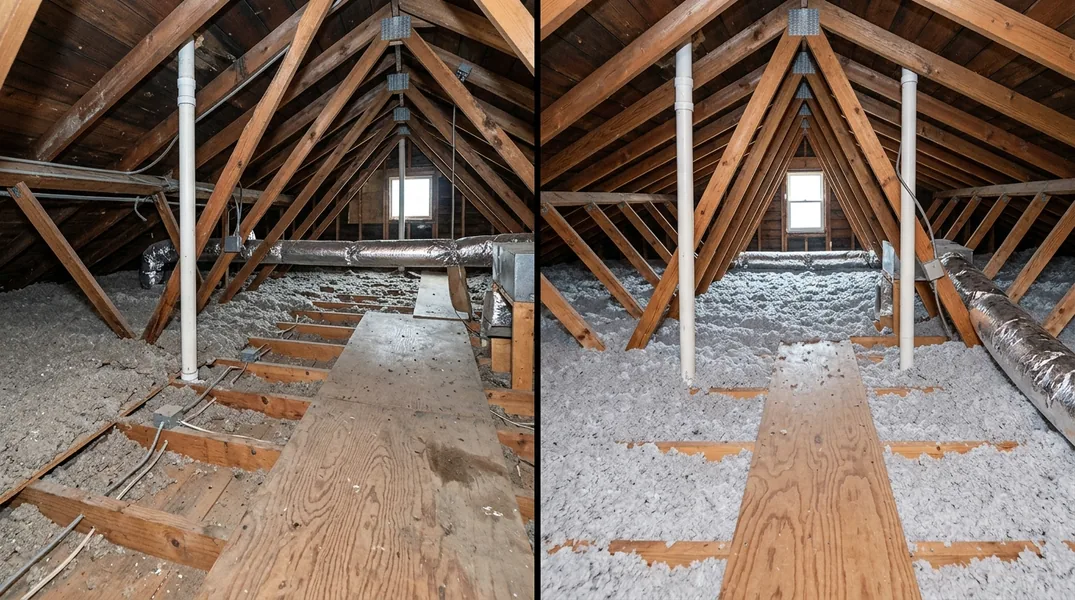
The Mid-Century Attic Problem in Madison
Many Madison homeowners live in charming mid-century homes built between the 1940s and 1970s. These houses have character, solid bones, and often surprising energy inefficiency hiding in their attics. Over the decades, the original insulation materials have settled, compacted, and lost their thermal resistance. What once provided adequate coverage now leaves gaps and thin spots that allow precious heated air to escape during Wisconsin's brutal winters.
This settled insulation becomes especially problematic when combined with another winter nightmare: ice dams at the eaves. When warm air leaks from your attic through inadequate insulation, it melts snow on the roof. That water runs down and refreezes at the cold eaves, creating dams that trap water and cause leaks into your home. The cycle repeats year after year, damaging fascia, soffits, and interior walls. Understanding why your attic insulation matters is the first step toward solving both the energy loss and ice dam problems that plague so many Madison homes.
Spray Foam vs. Blown-In Insulation: Why Coverage Matters
When homeowners research the best insulation for attic upgrades, they often compare spray foam vs. blown-in insulation. Both have legitimate uses, but they perform very differently in real-world conditions. Blown-in insulation, typically made from cellulose, fiberglass, or mineral wool, is applied by machine and settles into the attic space. While it starts with decent R-value, it compacts over time, especially in older homes where air movement and vibration are constant.
Spray foam, by contrast, expands as it cures and creates a continuous thermal barrier that doesn't settle. When you choose Attic Spray Foam Insulation, you're investing in a material that maintains its R-value year after year. For homeowners dealing with settled insulation in mid-century homes, this difference is crucial. Blown-in insulation may seem cheaper upfront, but the long-term energy savings and ice dam prevention that spray foam delivers often justify the investment, especially in Wisconsin's harsh climate.
Spray Foam vs. Fiberglass: Understanding the Performance Gap
Fiberglass batts and rolls have been the standard attic insulation for generations. They're affordable, easy to install, and familiar to most homeowners. However, spray foam vs. fiberglass reveals important performance differences that matter in practice. Fiberglass provides good insulation when properly installed and maintained, but it's vulnerable to air leakage around edges, gaps, and penetrations. In an older attic with irregular framing, pipe chases, and electrical conduits, fiberglass batts leave countless small gaps where conditioned air escapes.
Spray foam seals these problem areas completely. It expands into crevices, around ductwork, and along rim joists, eliminating air infiltration. This air-sealing capability makes spray foam especially effective at preventing the warm air escape that causes ice dams. When warm air leaks into the attic space, it melts snow and creates those destructive dams at the eaves. By choosing spray foam, you're not just upgrading insulation; you're solving the root cause of winter moisture problems that plague many older homes in the region.
Spray Foam vs. Cellulose: Settling, Moisture, and Long-Term Value
Cellulose is a popular blown-in insulation made from recycled paper. It has a decent R-value per inch and appeals to environmentally conscious homeowners. However, spray foam vs. cellulose reveals critical differences in how these materials perform over time. Cellulose settles significantly, especially in attics with any air movement or vibration. It's also more susceptible to moisture absorption, which can reduce its effectiveness and create conditions for mold growth. In Wisconsin's humid climate, moisture management is essential for attic health.
Closed Cell Spray Foam Insulation offers superior moisture resistance and maintains its R-value indefinitely. It doesn't settle, doesn't absorb water, and creates a vapor barrier that protects your attic structure. While cellulose may cost less initially, the superior performance of spray foam in Wisconsin's climate conditions makes it the smarter long-term investment. You'll see this reflected in lower heating bills, fewer ice dam problems, and better attic conditions year after year.
How Attic Spray Foam Prevents Ice Dams Near Me
Ice dams form when your attic is too warm. Heat escaping through inadequate insulation melts the snow on your roof, water runs down to the cold eaves, and refreezes into a dam. This trapped water backs up under your shingles and leaks into your home, causing water damage, mold, and expensive repairs. Many homeowners in Madison and surrounding areas experience this problem every winter because their attics lack proper insulation and air sealing.
Attic Spray Foam Insulation prevents ice dams by keeping your attic cold. The continuous thermal barrier created by spray foam stops warm air from rising into the attic. Combined with proper ventilation at the eaves, this maintains consistent roof temperatures that prevent the melt-and-freeze cycle. If you're tired of dealing with ice dams, water stains, and the stress of winter weather damage, professional spray foam installation is a proven solution. Madison Spray Foam Insulation serves the entire Madison area with expert installation. Call us at (608) 292-6626 to discuss how we can protect your home.
Attic Spray Foam Insulation Cost in Madison: What to Budget
Cost is a legitimate concern when considering any home improvement project. Spray foam typically costs more per square foot than blown-in insulation or fiberglass batts, but this comparison doesn't tell the whole story. The pricing for Attic Spray Foam Insulation varies based on attic size, existing insulation removal requirements, and whether you choose Open Cell Spray Foam Insulation or closed cell options. Open cell is generally less expensive and works well for interior applications, while closed cell provides superior moisture resistance and is ideal for attics in humid climates.
When you calculate the total value, spray foam delivers impressive returns. Energy savings typically range from 15 to 30 percent on heating and cooling costs, depending on your current insulation condition. Ice dam prevention saves thousands in potential water damage repairs. The material's durability means you won't need replacement for decades. Madison Spray Foam Insulation offers transparent pricing and can provide a detailed estimate for your specific situation. Request a free estimate today by calling (608) 292-6626, and we'll help you understand the investment and payback timeline for your home.
Looking for a professional spray foam insulation contractor in Madison? Madison Spray Foam Insulation responds fast for all your spray foam insulation needs.
Get a Free Quote