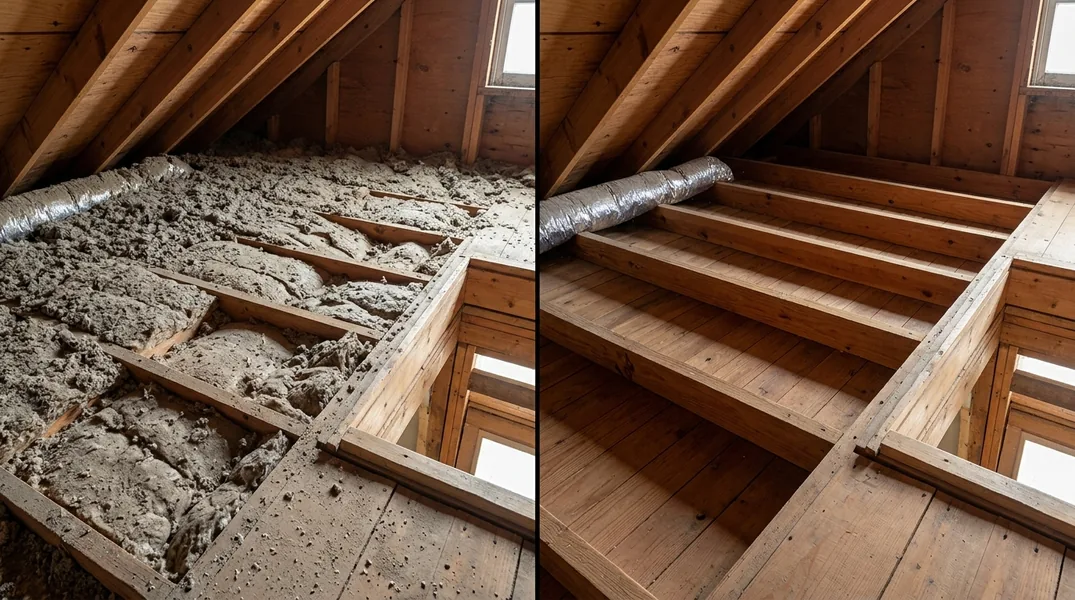
Why Madison's Historic Bungalows Need Modern Insulation Solutions
The charming bungalows that line Willy Street and Monroe Street in Madison are architectural treasures. Built primarily in the early 1900s, these homes feature original hardwood floors, built-in shelving, and character that new construction simply cannot replicate. However, their age comes with a significant drawback: poor insulation. Most of these historic homes were built with minimal or no attic insulation, relying instead on natural air circulation and thick walls to manage temperature.
Today's Wisconsin winters demand better. The energy costs associated with heating an under-insulated bungalow can be substantial, and comfort suffers when cold air seeps through the attic and walls. This is where Attic Spray Foam Insulation becomes a game-changer. Unlike traditional fiberglass batts that settle over time and leave gaps, spray foam creates a continuous thermal barrier that adapts to the unique geometry of older homes. For homeowners in Madison looking to preserve their home's character while modernizing its efficiency, spray foam offers a practical solution.
Is Spray Foam Insulation Worth It? A Madison Homeowner's Perspective
The question of whether spray foam insulation is worth the investment depends on several factors specific to your home and situation. For most homeowners in Madison, the answer is yes, but it requires understanding both the benefits and the commitment involved. Closed Cell Spray Foam Insulation offers an R-value of approximately 6.5 to 7.0 per inch, meaning you need less material to achieve superior insulation compared to fiberglass's R-3.2 to R-3.8 per inch. This efficiency translates directly into energy savings, particularly valuable during Wisconsin's extended heating season.
Beyond raw energy performance, spray foam provides benefits that traditional insulation cannot match. It seals air leaks, reduces moisture infiltration, and creates a more stable indoor environment. Homeowners often report noticeable comfort improvements within the first heating season, with some seeing energy bill reductions of 15 to 20 percent. For historic bungalows on Willy Street and Monroe Street, where drafts are common and wall cavities are irregular, these advantages are especially pronounced. The upfront cost is higher than fiberglass, but when you factor in durability (spray foam lasts 80+ years versus 15 to 20 years for batts), the long-term value becomes compelling. If you plan to stay in your home for at least five to seven years, spray foam typically pays for itself through energy savings alone.
Is Spray Foam Insulation Safe? Addressing Legitimate Concerns
Safety is a reasonable concern when considering any home improvement, and spray foam insulation deserves honest evaluation. The good news is that when installed correctly by trained professionals, spray foam is safe. The installation process itself requires proper ventilation and protective equipment, but this is the installer's responsibility, not yours. Once cured, spray foam is inert and poses no ongoing health risk. The material does not off-gas indefinitely, though some off-gassing does occur during and immediately after installation.
The key to safety lies in professional installation. Improper application can leave uncrosslinked isocyanates in the foam, which can cause respiratory irritation. This is why hiring experienced contractors like Madison Spray Foam Insulation matters. Our technicians follow industry standards and best practices to ensure complete curing and proper ventilation during application. Additionally, if you have concerns about chemical sensitivity, Open Cell Spray Foam Insulation is an alternative option that off-gasses less than closed-cell varieties, though it has a lower R-value. Most homeowners experience no issues whatsoever, and the safety profile of professionally installed spray foam is well-established in the insulation industry.
Spray Foam Off-Gassing: What You Need to Know
Off-gassing is perhaps the most misunderstood aspect of spray foam insulation. Simply put, off-gassing is the release of volatile organic compounds (VOCs) that occurs during the curing process. For spray foam, most off-gassing happens within the first 24 to 48 hours after installation, with minimal activity thereafter. The smell you might notice is not necessarily harmful, but it is noticeable. Professional installers take precautions to minimize exposure by ensuring adequate ventilation during application and recommending that you leave the home or stay in a different area during installation and the immediate curing period.
The risk of off-gassing-related health effects is low when proper installation protocols are followed. If you are concerned, you can request that windows remain open for 24 to 48 hours post-installation and consider staying elsewhere briefly. For homeowners with multiple chemical sensitivities, discussing your concerns with Madison Spray Foam Insulation before scheduling work is important. We can explain our specific products and installation procedures so you feel confident moving forward. The long-term off-gassing after curing is negligible, and the material itself becomes stable and chemically inert once fully cured.
Spray Foam Insulation Pros and Cons: Making an Informed Decision
Like any home improvement product, spray foam has genuine advantages and some legitimate limitations worth considering. The primary advantages include superior R-value per inch, excellent air sealing properties, long lifespan, and the ability to conform to irregular spaces common in older homes. Spray foam also provides some moisture resistance and can help prevent pest infiltration. For Madison homeowners dealing with drafty bungalows, these benefits are substantial and measurable.
The cons are worth acknowledging honestly. Spray foam costs more upfront than fiberglass or cellulose insulation. Installation requires trained professionals, so you cannot DIY the project. Once installed, it is difficult to modify or remove if future renovations require it. Some people are sensitive to the odor during curing. Additionally, if moisture becomes trapped in closed-cell foam (a rare scenario with proper installation), it can be problematic. However, these drawbacks are manageable and should not overshadow the benefits for most homeowners. The comparison is straightforward: you pay more initially to get better performance, durability, and comfort for decades to come.
Spray Foam Insulation Problems: Prevention Through Professional Installation
Common spray foam problems almost always stem from improper installation rather than the material itself. Poor application can result in incomplete coverage, inadequate curing, improper density, or moisture issues. Some installers rush the job, fail to properly prepare the space, or use equipment that is not calibrated correctly. This is why choosing an experienced, reputable contractor is non-negotiable. Madison Spray Foam Insulation has the expertise and equipment to avoid these pitfalls. We properly assess your attic or wall cavities, use calibrated equipment, follow manufacturer specifications precisely, and ensure complete curing before the space is reoccupied.
Another consideration is selecting the right type of foam for your application. Closed Cell Spray Foam Insulation is ideal for attics and areas where high R-value is a priority, while open-cell foam works better in some wall applications. For Wall & Injection Foam Insulation in historic homes, professionals must understand the unique challenges of existing wall cavities and select appropriate products. When you work with experienced contractors who understand these nuances, problems are virtually eliminated. If you are ready to explore spray foam for your home, contact Madison Spray Foam Insulation at (608) 292-6626 or request a free estimate to discuss your specific situation and concerns.
Attic Spray Foam Insulation Cost in Madison: What to Budget
Understanding pricing is essential for making an informed decision about spray foam insulation. Costs vary based on attic size, existing insulation, accessibility, and the type of foam selected. For a typical Madison bungalow with an attic of 800 to 1,200 square feet, homeowners should expect to invest between $1,500 and $3,500 for closed-cell spray foam. Open-cell foam is generally less expensive, ranging from $1,000 to $2,500 for the same space. These figures represent a significant investment, but they must be evaluated against the energy savings and comfort improvements you will enjoy for the next 80+ years.
Several factors influence your specific cost. Attics with existing insulation require removal before spray foam application, adding labor time and disposal fees. Tight attic spaces or complex roof geometries may increase difficulty and cost. However, many homeowners find that the energy savings offset the initial investment within five to ten years, after which you are essentially heating and cooling your home for free. Additionally, some utility companies and government programs offer rebates or incentives for energy-efficient home improvements. Madison Spray Foam Insulation can discuss current incentives and provide a detailed free estimate tailored to your home and budget.
Getting Started: Spray Foam Insulation Near Me in Madison
If you live in one of Madison's charming historic neighborhoods and are ready to improve your home's energy efficiency, the first step is a professional consultation. Madison Spray Foam Insulation serves homeowners throughout the area, including those in the Willy Street and Monroe Street districts. We understand the unique characteristics of older homes and can recommend the best insulation strategy for your specific situation.
Reach out to Madison Spray Foam Insulation today at (608) 292-6626 or visit our website to schedule a free estimate. Our team will inspect your attic or walls, discuss your concerns about safety and off-gassing, explain the pros and cons in detail, and provide transparent pricing. Whether spray foam is the right choice for you or not, we will help you make a decision based on facts and your home's specific needs. Your comfort and peace of mind matter, and that starts with a conversation with professionals who genuinely understand spray foam insulation.
Looking for a professional spray foam insulation contractor in Madison? Madison Spray Foam Insulation responds fast for all your spray foam insulation needs.
Get a Free Quote